

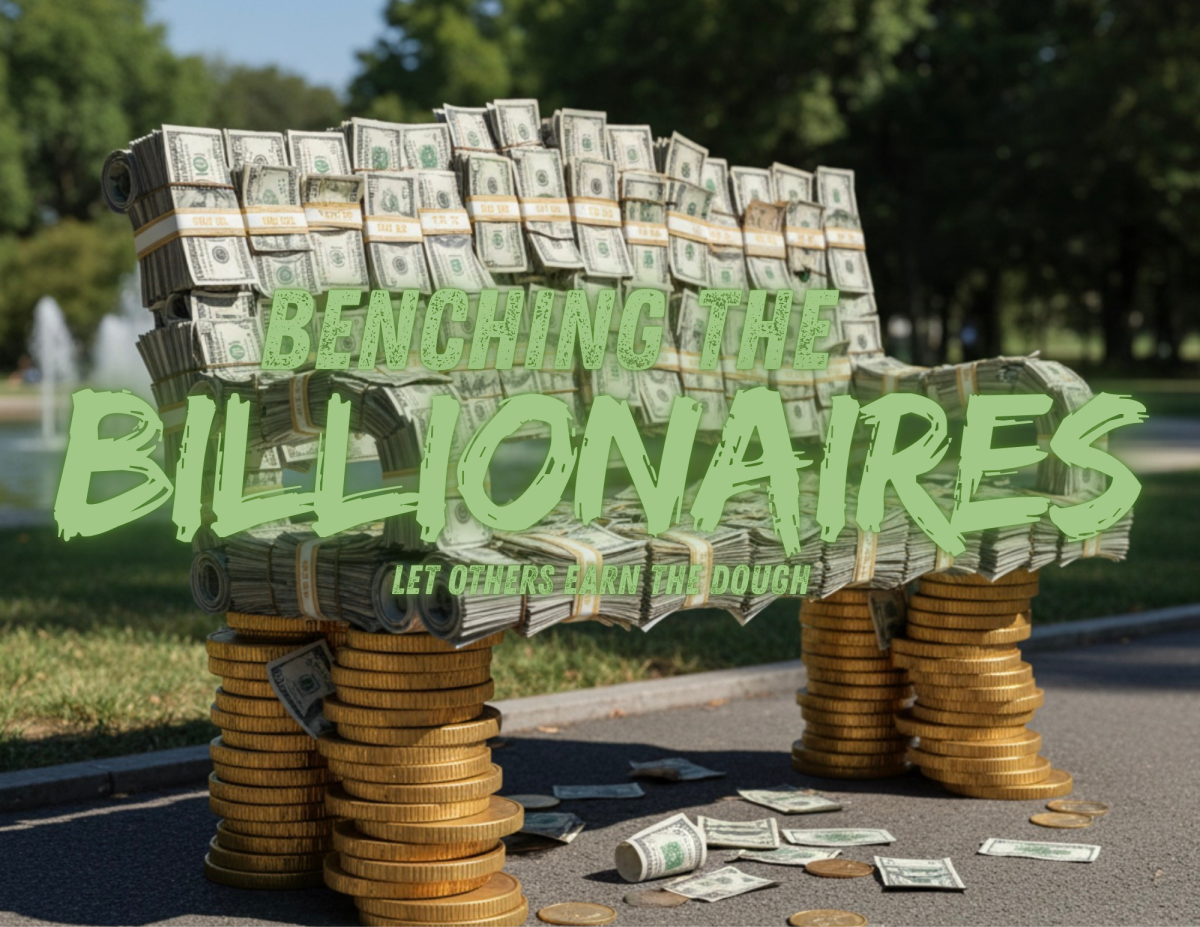
Elon Musk: The founder and CEO of SpaceX, the co-founder of Tesla and the man who converted the social media platform once known as Twitter into the world renowned X. In an overview of 2025, Musk’s net worth was about $482.5 billion US dollars, and in October of 2025 he was the first person to briefly reach a net worth of over $500 billion, making him the richest person in the world.
Wealthy individuals looking for somewhere to put their money often donate a percentage of their earnings to charities and organizations. Between 2022 and 2024 Musk donated approximately $7 billion in stock. This kind of donation should’ve made Musk seem like a saint.
However, that wasn’t the case. In reality, Musk donated $7 billion to the Musk Foundation, a private charity of his own creation. Furthermore, he’s been notorious for donating only to organizations with direct ties to his businesses and family, keeping his money tightly connected to his wallet.
While billionaires like Musk reach unimaginable power from their own pockets, the poverty rates in the US alone continue to impact around 36.8 million people.
To make matters worse, poverty rates are expected to increase in the coming years, due to the drastic decrease of government funding in recent years. With the impact of funding cuts to programs such as SNAP, Medicaid, SSI and TANF, families will struggle more than ever to simply meet their basic needs.
The underlying reason behind the cuts to government spending is because the government isn’t receiving enough money to keep up with payments. It could be argued that cutting back is simply necessary to combat the rapid increase of national debt. While reducing spending is a viable solution when money is tight, it is not the solution to fix this crisis.
Decreasing spending is a fix that covers a fracture in the economy for a short period of time, until another larger and deeper fracture appears. If our nation wants to solve this problem once and for all, we need to stop placing bandaids on surface level issues, and target the root of the problem: the government doesn’t have enough money.
A few solutions to combating the national deficit, besides cutting spending, include imposing tariffs and raising taxes. In just the past year, the Trump Administration has established substantial tariffs on goods such as steel, aluminum, lumber and copper. These goods are imported from major countries like China, Canada, Mexico and nations in the European Union.
The idea of tariffs could’ve been an effective solution. However, the industries suffering from the increase of taxes are supplying materials that are used in nearly every part of the US economy. Due to this, the tariffs actually further escalated the inflation that started in 2021.
Since foreign manufacturers are forced to raise their prices to maintain profits, domestic buyers also must raise prices in order to make a profit in spite of the expensive imported components used to produce their product.
The increase of tariffs also causes the decrease of foreign competition in trade. Since foreign competitors have to pay more to trade, they stop trading as frequently, which allows domestic competitors to take the spotlight and raise their prices simply because of demand.
Though it’s a viable strategy, raising taxes is a less popular solution because it’s not ideal when so many citizens are experiencing poverty.
Most of all, the least effective solution is the recently established tax cuts for wealthy individuals and companies. Why should the wealthy claim large tax breaks while the rest of the country continues to suffer from inflation and poverty? Aren’t the wealthy capable of contributing more? Why force those who can barely afford their necessities to sustain the country while the wealthy get a pass?
Instead, the wealthy should receive higher tax payments while those with less should receive tax breaks. This idea combats the issues created by trickle down economics, the economic theory that a large portion of our society is built from. The theory suggests that providing tax cuts and benefits to the wealthy allows them to keep more of their earnings. Then they’re supposed to reinvest their money back into the economy to create new jobs, invest in expansion and offer higher wages to stimulate the economy.
But high income individuals like Musk have tainted the ideals of the trickle down theory. Instead of reinvesting a portion of their earnings back into society, they hoard it and use it to generate more money for themselves. This draws an even greater divide between the rich and poor, keeping economic growth stagnant and broadening the gap of inequality. Giving tax breaks to lower income individuals will allow them to keep more of their hard earned money, without fear of barely making it by after they’ve given half to the government.
With more money collected from the wealthy, the government will be able to provide better quality help in their assistance programs, and start paying off the rapidly increasing national debt. There will also be less need for heavy tariffs which will lessen the growth of inflation, and poorer individuals are more likely to keep buying more as they gain more money, which will help restimulate the economy.
It could be argued that forcing wealthy people to pay larger taxes is a punishment for financial success. But in cases like Musk, how is raising taxes any different than a wealthy person donating $7 billion to a single charity? At least by paying more to the government, a broader range of people will benefit from the assistance provided by government funded programs, not just people involved in one specific charity. This should be no issue for the wealthy, since many claim they want to help more people when given the opportunity. Unless, of course, they want positive recognition by donating their money to specific organizations, and then waiting for it to circulate back to their pockets.
Ultimately, our country can only run successfully when everyone contributes. Nobody wins if our nation fails. In order to make sure our home has a bright future, we need to be the country we intended to be: A place where people lift others up and help them when they are in need. If each of us offers our best effort to give a little more, we will receive more, and together we can make a difference.