

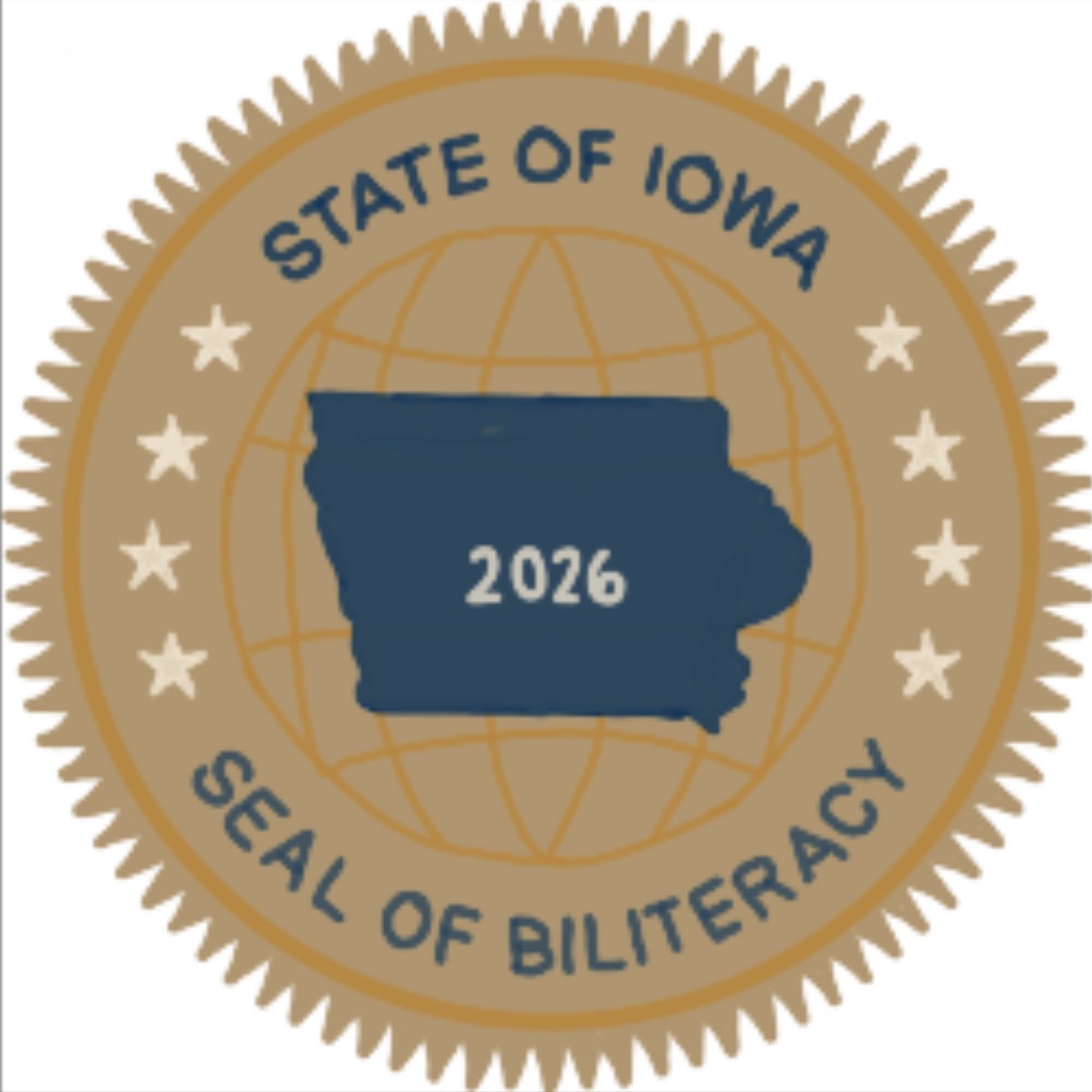
In recent weeks, several students at Johnston High School were tested on their proficiency in a different language and had the opportunity to earn a Seal of Biliteracy that would enhance resumés and provide academic advantages.
“The Seal benefits students because it shows that they’re capable of something that is potentially hard…it gives them a sense of pride in how far they’ve come in another language,” JHS Spanish teacher Kari Gray said.
For some students, taking the Seal of Biliteracy was an easy decision since they had been growing up around the language their whole lives. For Zoe Mednick ‘27, the circumstances were no different when she took the Russian biliteracy assessment.
“What motivated me to take the test was I knew I would probably pass it since I’m already fluent and it would look good on my resume, so I’m sure it would open up opportunities for me in the future,” Mednick said.
However, there were many students taking the assessment who had only been introduced to their language in a classroom. They have already had opportunities to practice taking assessments in each of the four standards of the biliteracy test: listening, speaking, writing and reading.
“What surprised me most about the Seal of Biliteracy was the types of prompts used in the speaking and writing sections. Instead of just memorizing vocabulary or grammar rules, it really tested how well I could communicate in real-life situations,” Zoey Studer ‘27 said.
The Seal is beyond just a certificate of achievement; it’s an impressive part of a resume that showcases that a potential employee is capable of challenging themselves.
“I think the Seal of Biliteracy will positively impact my future by strengthening my college applications and setting me apart from other students. With a future in healthcare, being bilingual will help me build trust with patients and provide better care. It’s a skill that can truly make a difference in people’s lives,” Studer said.
Not all of the Seal of Biliteracy tests were created based on the typical four standards. For one test in particular, there was no need for sound at all. The first American Sign Language biliteracy test was taken last year at JHS by Maddie Lehmen ‘27.
“I signed with my deaf friends and people in my church; that was my practice…at the time I took the test, as a hearing person, who’d only been studying for two to three years, I had what I would consider a higher level of proficiency,” Lehmen said.
For some students, the Seal of Biliteracy isn’t just a resume booster but something that will guide them into their professional careers.
“I’m really interested in languages and in college I want to become a translator. I want to become an interpreter in the future for sign language… I once heard a saying that to only know english is to cut yourself off from billions of people in the world,” Lehmen said.
Beyond just being a certificate, the Seal of Biliteracy provides students with the chance to get ahead and prove that they are capable of difficult things.
“Even if you’re nervous, it’s worth trying. Start preparing early, practice speaking as much as you can and don’t be afraid to make mistakes. The Seal of Biliteracy is a great accomplishment and it can open doors for your future,” Studer said.