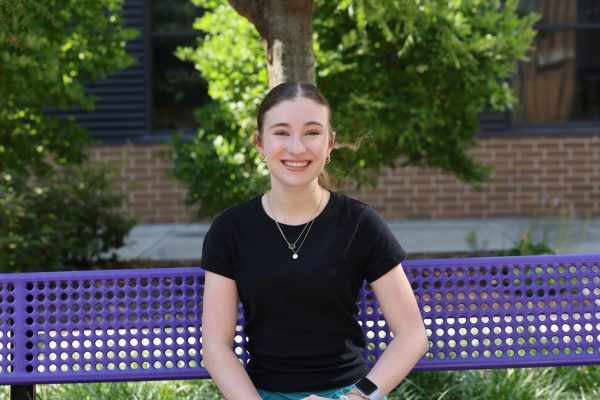



Emilia Kongshaug ‘26 takes a deep breath, looks at her partner, Ella Devine ‘26 and begins her duo interpretation performance. Blending excellent acting with blocking, characterization, energy, volume and timing, there is a lot that goes into the trophies, medals and plaques that Johnston Speech and Debate has earned over the years.
“My sister was in Speech and Debate for at least three years. I saw her involvement in theater and speech, and it really inspired me and I really wanted to do it. So I joined my sophomore year after going to a few meetings with her at the end of my freshman year,” Kongshaug said.
The Johnston Speech and Debate season starts with practices starting in September through March. They have full team practices on Tuesdays and throughout the week they have more individual practices as needed, with participants in multiple events. Competitions are held anywhere from the Des Moines area to Chicago or Minneapolis. The competitions typically have three guaranteed rounds, with a final round for those who qualify. If a student happens to compete in several events they go to get to perform in both and watch their competitors in their second round.
“One thing that I really like about Speech and Debate is that you’re not only learning and improving your speaking skills, you’re learning and improving your listening and audience skills as well,” Devine said.
Speech and Debate is unique because the season runs much longer than most after school activities. Competitions run from October to the beginning of March. Speech tournaments are typically Friday nights and Debate tournaments are on Saturdays. With all the time and effort JHS students put into Speech and Debate, they have to be dedicated to their activity while balancing the regulars: school, jobs, family and other extracurricular activities.
“I just think it’s the hours sometimes that can be a little challenging, but in the end, I know it’s rewarding not only for myself, but for the other students too,” Coach Tyler Stough said. “So it’s knowing how to balance that and making sure that you’re taking care of yourself, but you’re also giving the best opportunity for your students.”
Students that join, sometimes, don’t know where to start. The most important thing they can do is start learning about their event, practice and then attend tournaments to get feedback and prepare for more rigorous competitions such as the out-of-state and national qualification tournaments.
“I would say just getting familiar with each event was the first step that was really difficult. And then also there’s a lot more social things going on to make sure that everyone’s collaborating in a way that works best for everyone. So it means that everyone learns how to best work with other people,” Alan Qi ‘26 said.
After students have completed several competitions, members have already learned many valuable lessons from participating. They’ve not only learned how to be a better speaker, but they’ve gained valuable skills that they can use for the rest of their lives.
“I think the biggest thing I learned was probably just working with other people and being able to communicate, collaborate and finding ways that even if we don’t agree on how certain things work to find a compromise in order to make that function,” Qi said.
People in Speech and Debate have formed friendships within the team and with competitors from different schools from their shared interests. They cheer each other on in events and give each other the feedback and support they need to get through tough competitions.
“My favorite thing about Speech and Debate is that there’s a place for everyone, no matter what your skill set is [and] no matter what you’re passionate about. There is an event that encompasses really anything,” Devine said.
In the Johnston Speech and Debate program, there’s an event for anyone, from acting events in speech, partner events in both, topics you’re passionate about and spontaneous speaking. The Johnston Speech and Debate program has had much success in all of these events, however, participation has waned over the years and they are always looking for new members.
“Honestly, for anybody that’s going to college, if they [colleges] see that you’re part of the National Speech and Debate Association, or even the Iowa High School Speech Association, your resume goes up on top because they know that you’re already a really good speaker. You’re a really good critical thinker. We hear a lot of times through other students that have come back and be like, ‘Wow, I’m really glad I did this. It’s made my college life a lot easier,’” Stough said.