With the Johnston Varsity Marching Band season finishing out, time is up for the seniors in the class of ‘26. With roles coming to an end, the thought of leadership remaining in the band has stayed up for debate, with some student leaders not wanting to continue their roles, and others requesting that it will keep the band structure as the band splits. Concert band has started and the role of center snare is no longer needed, but not forgotten.
“I feel like I will always be there if any of my section needs advice or help on anything as they become upperclassmen and leaders, but I’ve kind of stepped down from my role now and just want to have fun with them as friends in concert band,” Lulu Kang 26’ said.
However, the role of center snare is a crucial part of the marching band. In order to keep time, the drum majors follow the feet of center snare and the rest of the band follows the drum major’s hands, the center snare is responsible for maintaining time. This year, Kang took up the role of center snare for the drum line after being in the drum line the previous two years and being the only senior snare in the drumline.
“A lot of people think that my job is just to watch the drum major and tap off the band, but I actually also have to make sure my section is playing together and give corrections to them too. A lot of the time during runs I’ll be watching the drum major, marching, playing and calling out reminders and corrections to my section,” Kang said
Any leadership role in a band can change someone’s life. For some, this role is something that shapes their whole life in a new direction or just changes the way you go about life.
“It’s taught me a lot about leadership and given me patience and confidence in myself. I had a lot of struggles, but it all paid off because I was able to get our section super strong musically while also being really close as friends. I feel like the dynamic we created this season is really what made us great,” Kang said.
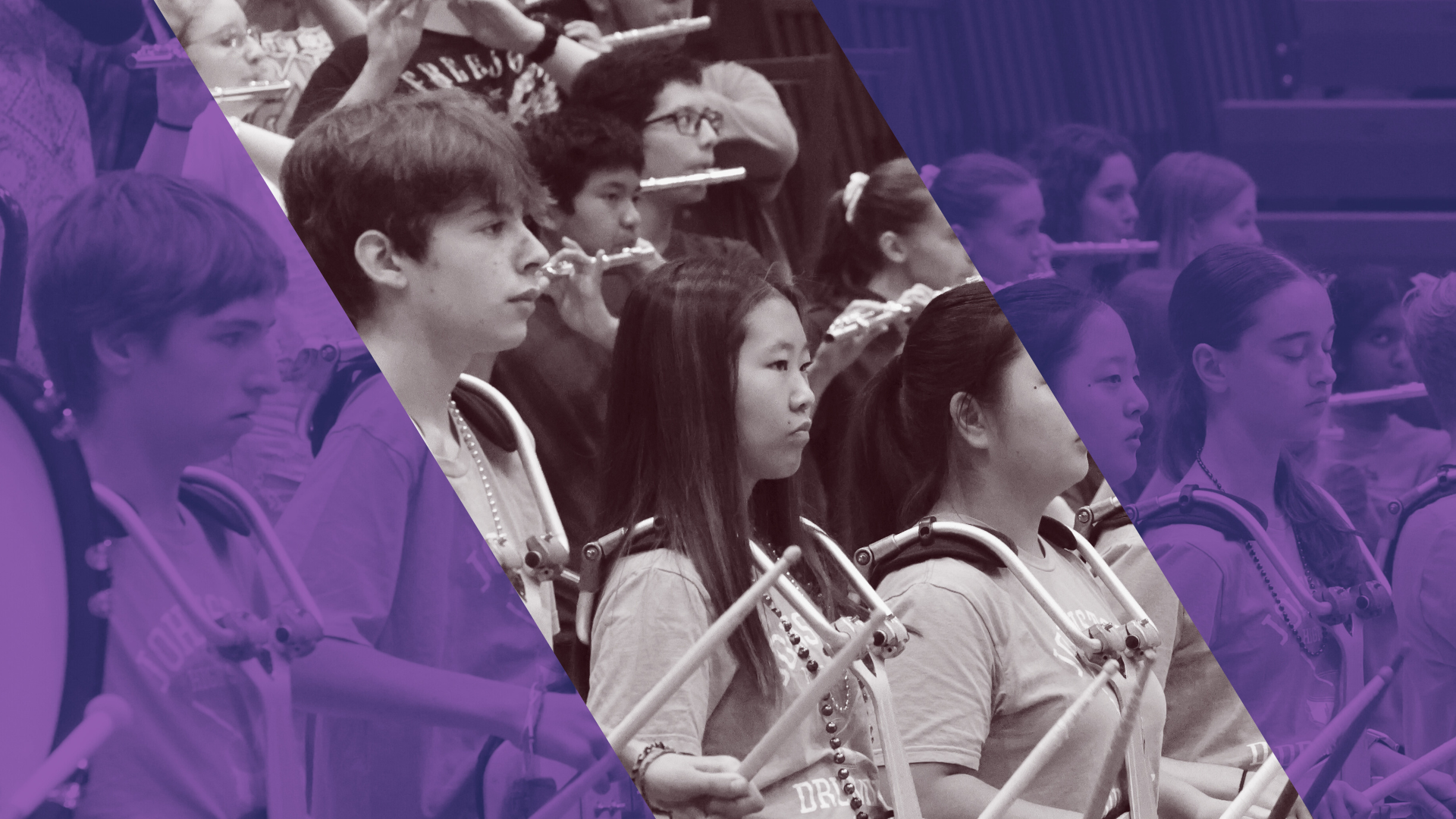
The drumline as a whole has a history of being tight-knit. They practice a lot together, but they also hang out a lot just to get as close as possible. Some would say that without the drum line, there would be no band. In fact, marching band traditionally started with only drums and a high pitched instrument called a riffe; these were called military marching bands.
“In the 1700s, military marching bands appeared in Revolutionary-era America in the form of fife and drum corps. The earliest military marching bands that historians have documented were from the Ottoman Empire in the 13th century. The Ottomans conquered vast swaths of territory in Northern Africa, the Middle East and southern Europe and brought their marching band tradition with them,” said Mike Levine, a writer and editor who has covered the music industry for many years on television shows for CNN, the History Channel, A&E and more.
For the Johnston high school drumline, their time together looked something like this:
“We had morning rehearsals with the whole band every day, which was about an hour and a half, then practiced on Wednesday nights with just percussion from 7-9. In total it was about 8 hours of practice a week, but we also spent a lot of time together at drumline dinner, football games and competitions,” Kang said.
The JHS marching band has had a lasting impact on many. While the seniors in the class of ‘26 may never get to experience this type of community and band again, the memories will never fade. Their strive was never to win, but rather to make memories and have fun.
“I was really happy with our final run. There were some things that we hadn’t played clean the whole season that we finally hit, which was the best feeling ever and made me feel like it was all worth it,” Kang said.